
How Embedded Solutions Are Transforming Modern Industries: From Automation to Real-Time Intelligence
Industries are changing fast. Electricity costs are rising, machines need smarter control, and global markets demand sustainable manufacturing.
That’s why more factories today are moving toward Solar Energy + Industrial Automation — a combination that saves money, improves efficiency, and makes the plant future-ready.
Below are the 4 most important reasons why industries should consider this upgrade.
1. Real-Time Monitoring That Improves Industrial Output
Embedded solutions are the brain behind modern machines.
Whether it’s a production line, safety monitoring device, actuator, motor control, or communication system — embedded technology silently manages everything.
Industries today are shifting from manual operations to smart, intelligent, automated systems, and embedded solutions make this transformation possible.
Embedded sensors can monitor:
Temperature
Pressure
Vibration
Current load
Machine speed
Chemical levels
Motor health
This data prevents dangerous failures and predicts issues before they occur.
✔ Benefits:
Less downtime
Early fault detection
Higher machine precision
Better quality control
2. Automation Through Embedded Controllers Reduces Human Error
Manual systems depend on labor, but embedded automation ensures:
Accuracy
Repeatability
Consistency
24×7 operation
Microcontroller-based systems control motors, valves, timers, relays, and entire process lines with precision.
This reduces manpower cost and improves production speed.
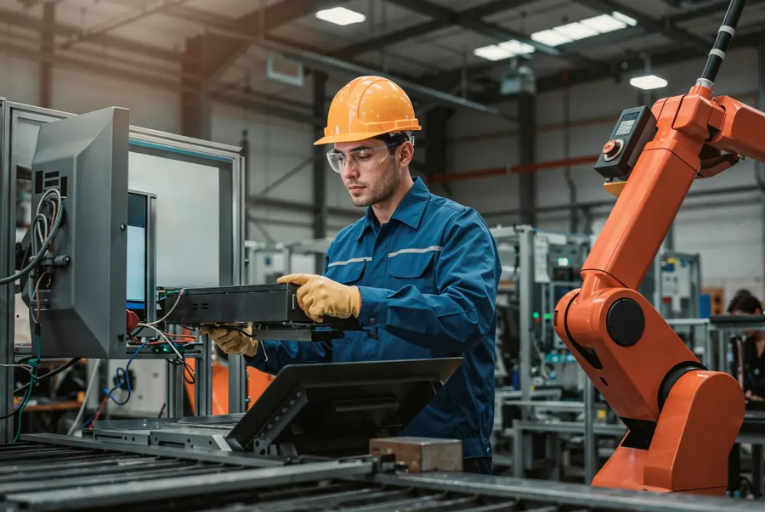
3. Custom Embedded Design Makes Every Machine Smart
Using advanced hardware + firmware, embedded systems allow:
Smart energy management
Wireless communication
Remote monitoring
Data logging
Predictive maintenance
Industries can customize controllers based on their exact requirement.
Conclusion
Embedded technology is shaping the “Industry 4.0” era.
It makes factories smarter, safer and more efficient.
For industries seeking automation, accuracy and long-term reliability, embedded solutions are no longer optional — they are essential.
